
Context
Campbell’s wanted to tap into the high-velocity football season shopper segment and drive awareness for their new Spicy soups line of products. They had partnered with LTIMindtree to create an AR (augmented reality) retail activation to communicate easy to cook “3-Ingredient Recipe Hacks” to shoppers, positioning the soups as convenient Game-Day side dishes for high-energy sports viewing, tailgating and watch parties. The experience had to overcome high-traffic retail aisle distractions, require no app download, and drive casual traffic to quick conversion at the shelf within a highly compressed user session.
Requirement
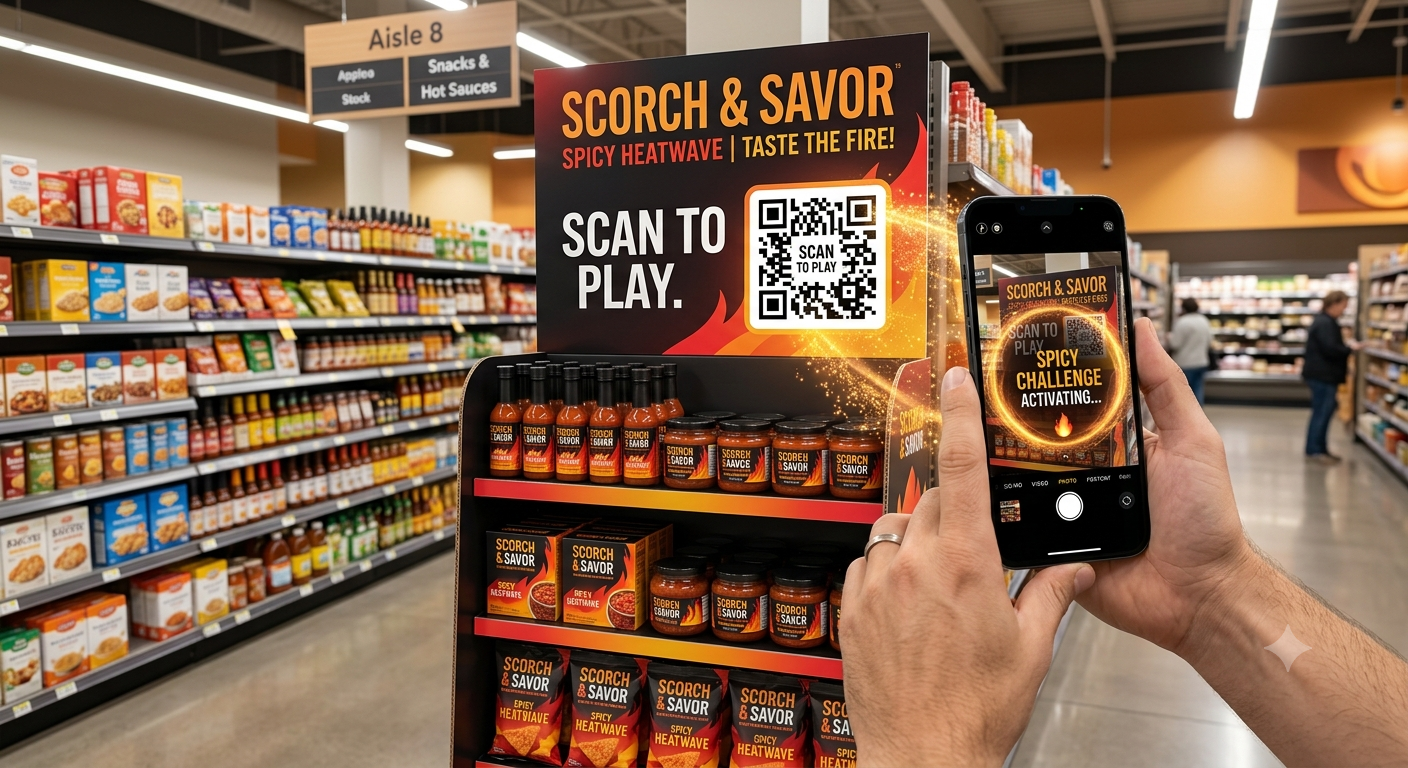
Tasked with designing a quick and engaging AR activation that communicates their “3-Ingredient Recipe Hacks”, educating the shoppers reagarding the utility of the products as a core ingredient for quick and easy to make game-day sides. Shoppers in retail stores would scan qr codes displayed along with products using their smartphones, effortlessly interactng with the activation in a busy retail environments, to driving an immediate brand connection and purchase intent. The challenge lay in creating an experience that connects football fans with the high-energy they expect and the spicy soups. It was a responsibility to define a compelling minigame structure to establish a clear user journey, interaction model, and visual identity that balanced entertainment with core product communication.
Solution
When the initial ideation phases hit hurdles with lack of clarity in minigame concepts, I audited the designs by the team and proposed a structural shift toward an interactive “learning by doing” gamified loop. Because immediate communication and frictionless completion were more valuable to the brand than deep gameplay mechanics, I prioritized UX and brand communication with a straightforward core loop of rapid, time-restricted challenge: click to flick the football through a virtual goalpost and collect all three recipe ingredients floating over the goalposts before the timer ran out. To instantly isolate users from the distractions of a busy retail aisle, I mapped out a 360 spatial metaphor. Upon scanning a retail QR code, the user’s camera view metaphorically teleported them onto the football field as a football player staring down the goalpost, surrounded by a lively, cheering stadium environment with dynamic lighting designed by the 3D designers on the project. Pushing “corporate” style boundaries, I designed a bold, video-game-styled 2D UI using Campbell’s signature red, white, and flame branding. The 2D UI was designed using Campbell’s core branding identity—leveraging their signature red and white color palette combined with spicy flame motifs. The design was intentionally pushed toward a bold, vivid video-game style. While, internal stakeholders initially suspected the client might reject such an unconventional look for a corporate product, with team support the designed was presented to the client. The client embraced the high-energy aesthetic because it effectively married the spicy product profile with the football theme. I then coordinated with the developer in the team to conduct technical feasibility checks and usability testing, ensuring the application ran smoothly on mobile web browsers.
Outcome
The client loved the high-energy design. The WebAR activation was successfully deployed across major US retail stores, integrated directly into point-of-sale displays alongside Campbell’s Spicy products. The project was featured by 8th Wall on their LinkedIn providing global recognition to the project. Furthermore, this success solidified the impact of creative design decisions with team leadership, building trust as an end-to-end XR designer working with high-stakes corporate accounts.